CeMAT 2026: Beyond the hardware, and what really drives automation performance
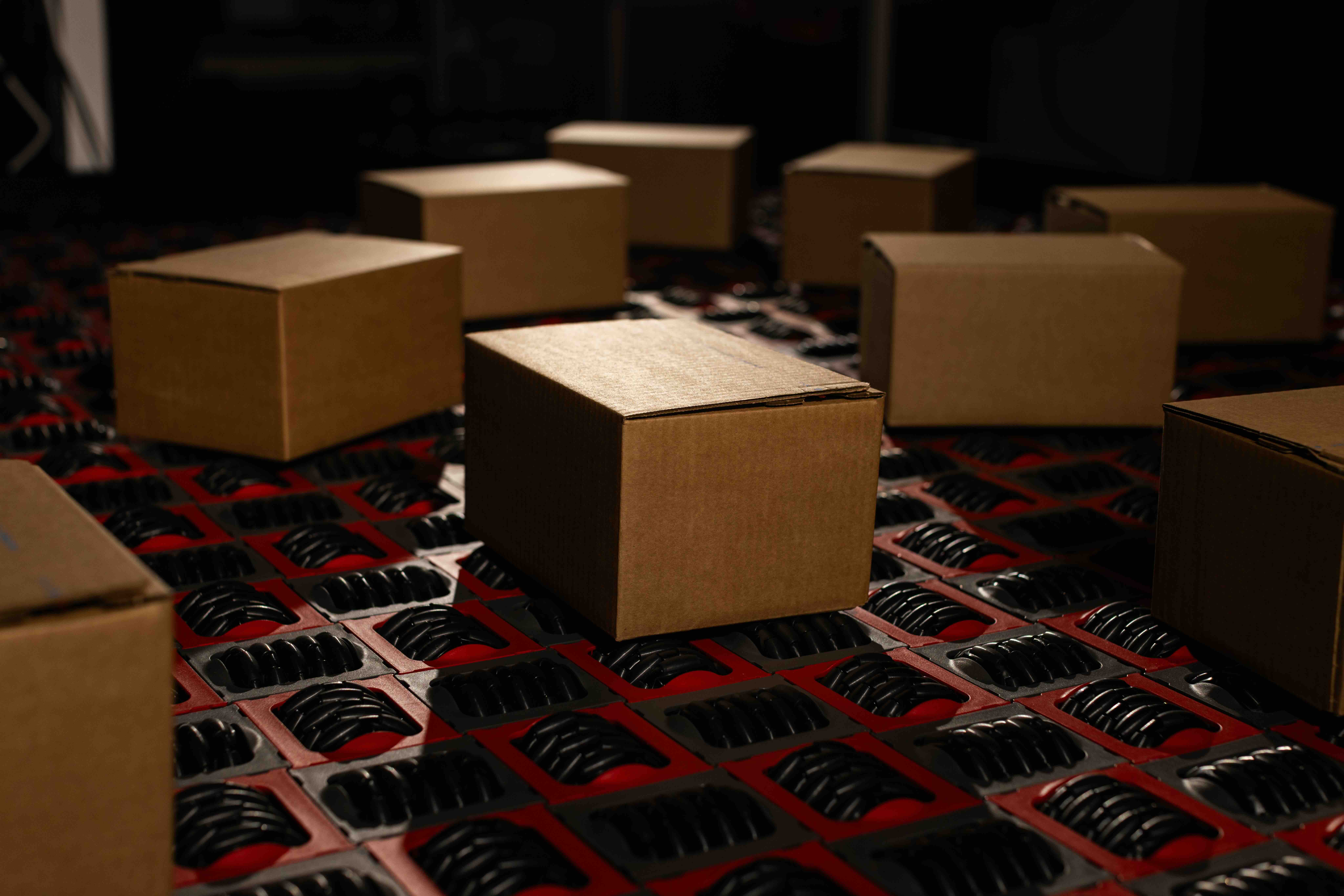
At CeMAT Australia 2026, Element Logic hosted a workshop focused on questions many warehouse leaders are facing such as what actually determines the success of an automation project, and how do you ask the right questions early to avoid costly surprises later?
While robots, conveyors and storage systems often take center stage, they are rarely what makes or breaks performance. Instead, the real drivers sit behind the scenes in software, simulation, data and compliance.
Bringing together expertise from both inside and outside Element Logic, the session explored how these elements work together to de-risk projects, improve decision-making, and create long-term operational value.
From systems to solutions
As Group Chief Product Officer Christian Rognes highlighted, the conversation around automation is shifting. It is no longer about standalone technologies, but about how to connect them into a cohesive system.
Element Logic’s approach reflects this shift. By combining robotics with a growing software portfolio including analytics platforms like eLogiq, and integrating with existing warehouse and business systems, the company helps customers move from fragmented solutions to fully connected, end-to-end automation environments.

The data will be the differentiator going forward. Regardless of how you look at it, if you cannot extract the data from your systems and workflows, you cannot use it for anything else
Christian Rognes, Group Chief Product Officer at Element Logic
This integration is what enables real performance gains. Data from across the operation can be collected, analyzed and used to optimize workflows, predict maintenance needs and reduce downtime turning automation from a one-time investment into a continuously improving system.
Rognes also emphasized the importance of building flexibility into automation strategies from the outset: “If you have an accurate and rich data model, you can create a digital twin of your warehouse and you can simulate every change – you can visualize it and you can test it. You de-risk everything you do. It also gives you a platform to innovate and test new technologies before you actually do it.”
Reducing risk before the first robot is installed
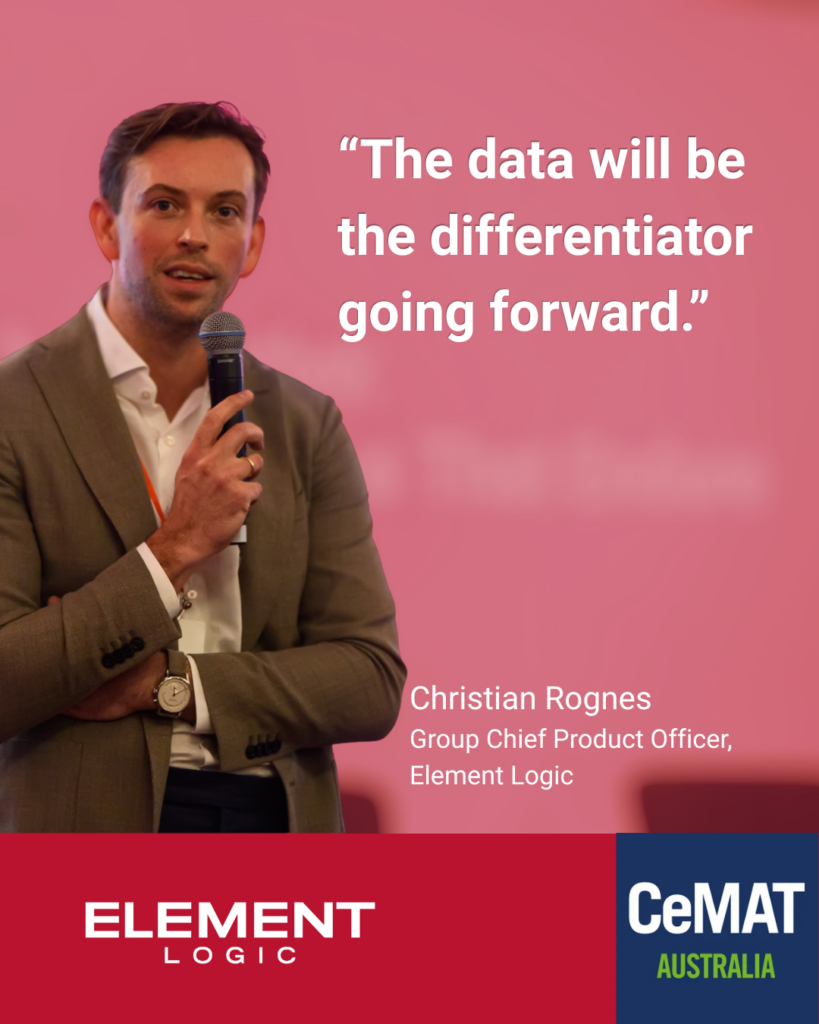
A second key theme in the session was the role of simulation and digital modelling, presented by Samir Rafiq, Head of Automation at Element Logic ANZ.

There are many considerations we have to make at the start, because if you don’t, it’s not as simple as throwing more robots at it
Samir Rafiq, Head of Automation at Element Logic ANZ
Modern warehouse design increasingly relies on digital twins (virtual representations of warehouse systems that make it possible to test layouts), processes and scenarios before physical installation begins. These models allow teams to validate throughput assumptions, identify bottlenecks and refine designs early in the process.
Simulation is not only about design. It also supports ongoing optimization, enabling teams to experiment with new strategies, forecast demand and adapt operations without disrupting live systems.
This goes to show that high-quality data and realistic forecasting are critical. Without them, even well-designed systems risk underperforming. With them, companies can make more informed investment decisions and reduce costly rework later.
As Rafiq put it: “Throughput is the promise that you sign up for.”
Designing for safety and compliance from day one
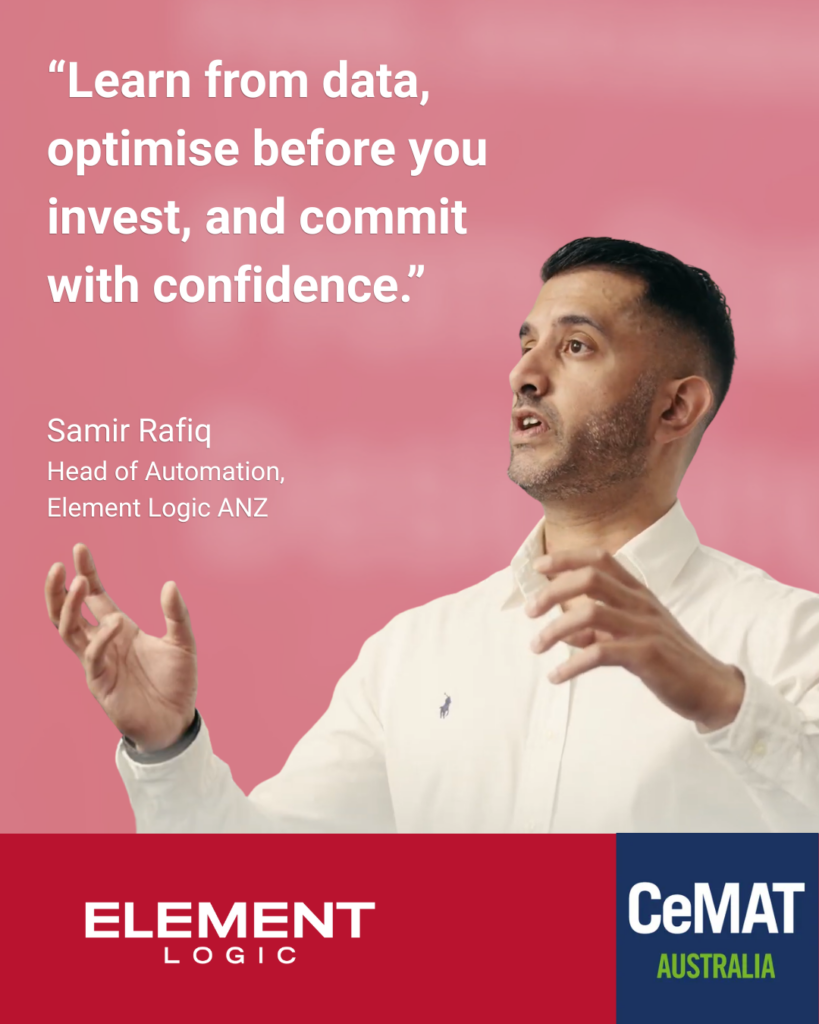
Fire safety and compliance was addressed by Colin Yeo, Director of Warehouse Focus, who emphasized the importance of embedding fire protection into the design process from the very beginning. Warehouse environments are classified as “ultrafast” in terms of fire growth, underscoring the need for early detection and rapid response.

When you first start an automation project, particularly in the planning and design phase, it’s important to understand the fire requirements
Colin Yeo, Director of Warehouse Focus
He highlighted how fire behavior differs depending on storage configuration, and how automated systems require carefully designed detection and sprinkler strategies to ensure fires can be contained and extinguished effectively.
Just as important is the compliance process itself, which involves coordination between fire engineers, authorities, insurers and other stakeholders, and typically takes several months to complete.
Designing with compliance in mind
The session also addressed a topic that is often misunderstood: fire safety and compliance in automated warehouses.
Drawing on extensive testing and industry guidelines, the discussion showed how fire protection is not an afterthought, but an integrated part of system design. For example, long-term testing has demonstrated how different protection methods, including sprinkler systems, can effectively control and extinguish fires in automated storage systems.
Understanding these principles early helps avoid delays, redesigns and unnecessary complexity in later project stages.
Turning insight into performance
Across all three topics, the consistent message was that success in warehouse automation comes from getting the fundamentals right early.
For Element Logic, this means working closely with customers throughout the entire life cycle from initial analysis and design to integration, optimization and long-term support. By combining software, simulation, engineering and operational expertise, the company helps customers build solutions that perform not just at go-live, but over time.
Because in modern warehousing, the real value of automation is not just in the hardware, but in how the entire system works together.