AI in Logistics: The Complete Guide
Artificial intelligence (AI) in logistics can help teams forecast demand, plan warehouse work, and spot equipment issues earlier. It can also help a picking robot identify an item and decide how to grip it. This guide covers where AI is used across logistics, what it looks like in a working warehouse, and what to check before investing in it.
What is AI in logistics?
AI in logistics is the use of technologies such as machine learning and computer vision to interpret data and support decisions or tasks. A forecasting model can look for patterns in order history. A vision system can help a robot recognize a product in a bin.
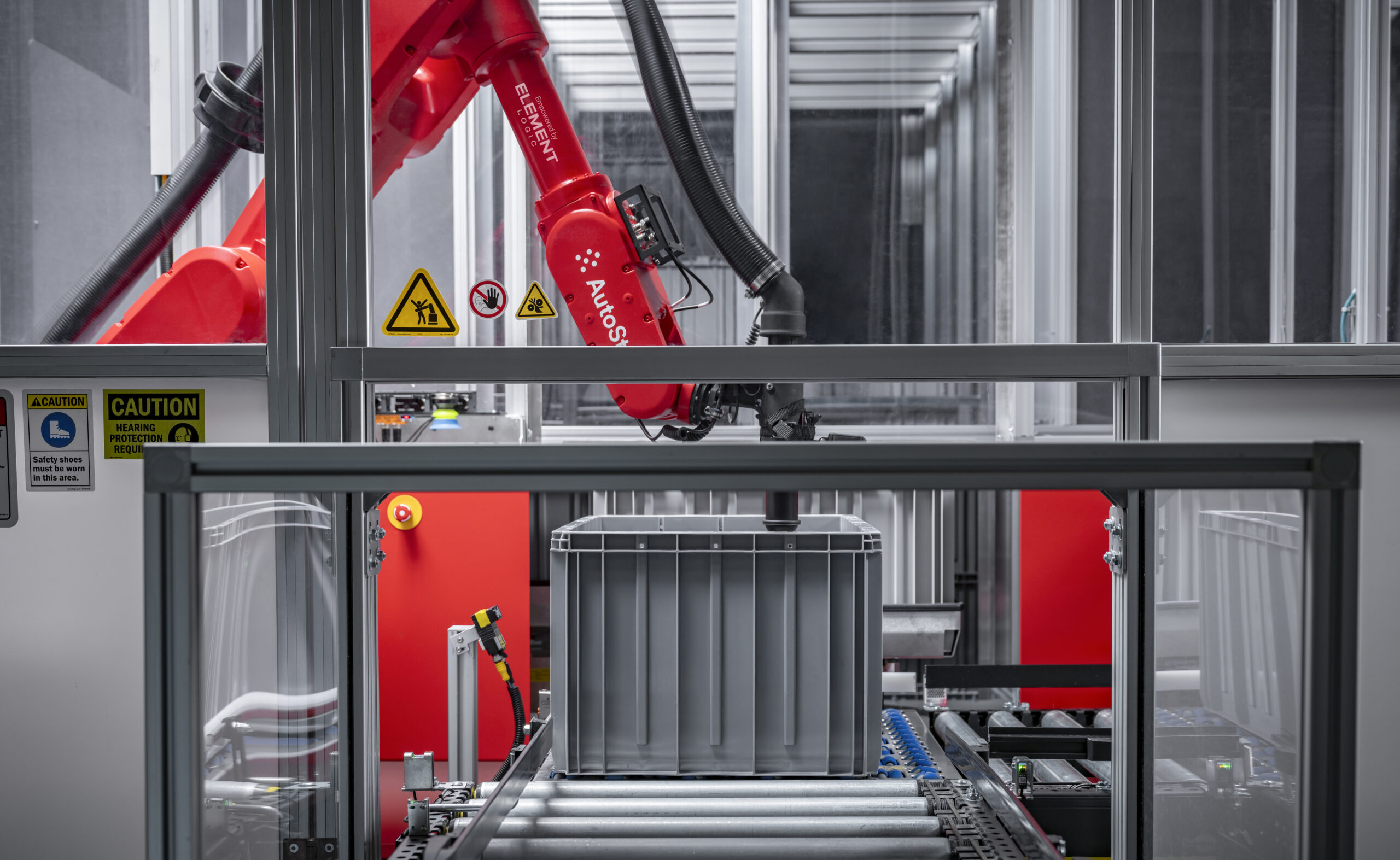
AI and automation are not the same. A conveyor can move a carton according to a predefined rule without using AI. In robotic piece picking, the arm performs the physical task. Vision and machine learning help it choose how to pick an item. Explore how warehouse automation works.
Where AI is used across logistics
Demand forecasting and inventory planning. AI can analyze historical data and demand patterns to help teams anticipate changes. A forecast can inform what to order, how much inventory to carry, or when to replenish it. Those are planning decisions, not guarantees that demand will match the forecast. Read more about AI in warehouse operations.
Warehouse workload and stock placement. Inside a warehouse, the question may be how many picking stations to staff rather than how much inventory to buy. The Port Planning module in Element Logic’s eLogiq forecasts workload to help teams plan staffing and port needs. Its Stock Management module can recommend changes to how inventory is stored in AutoStore. See what eLogiq can help you plan.
Robotic piece picking. A picking robot needs to know where a product is and how it can grip it. Vision-based gripping and machine learning help the robot handle individual items. This is a specific application of AI within the picking process. It does not mean that storage, packing, and shipping all use AI. Explore robotic piece picking.
Predictive maintenance. Equipment data can give teams an earlier indication that something needs attention. For example, eLogiq’s Proactive Uptime module uses machine learning to flag potential issues with AutoStore robots. The purpose is to give maintenance teams time to investigate before a problem affects operations. See how warehouse intelligence software supports maintenance.
Transportation and delivery. Beyond the warehouse, AI can help transport planners evaluate routes using inputs such as traffic, weather, and delivery constraints. That is separate from routing cartons or orders inside a warehouse. One helps plan a vehicle’s journey. The other moves goods through a facility.

What AI and analytics look like in practice
Hummel added AI-powered picking to an existing system. The sportswear brand integrated Element Logic’s eOperator with its existing AutoStore installation. AutoStore presents bins at the picking port. The robot picks individual items from those bins, reducing manual handling in that step. Read the Hummel story.
XXL moved from manual reporting to real-time analytics. Shift leaders had been using spreadsheets and manual logs to track warehouse performance. With eLogiq, they gained access to operational data such as order volumes and bin presentations without waiting for a manual report. For XXL, the change was in how teams used performance data during a shift. Read the XXL case study.
How to get started with AI in logistics
Start with a decision your team already makes. If staffing at picking stations is hard to plan, test whether a workload forecast helps. If equipment issues interrupt work, look at whether earlier alerts would give the maintenance team time to act.
Check the data and where the result will go. Identify which systems hold the relevant order, inventory, or equipment data. Check that the data is reliable enough for the task. Then decide who will use the forecast or alert, and what they should do with it. A forecast is useful only if it arrives in time to change a decision.
Measure one result before expanding. Compare the new approach with how the process works today. Depending on the use case, that could mean tracking picking accuracy, time spent compiling reports, or unplanned stops. Include integration and training in the evaluation, not just the cost of the tool.
What comes next for AI in logistics?
Some of the clearest uses today are focused on a single task, such as guiding a robot’s grip or flagging a potential equipment issue. A wider opportunity is for software to interpret signals from several parts of a warehouse and help teams decide what to do next. That is a direction of development, not a description of a fully autonomous warehouse today. Read our perspective on what works today in AI and automation.