Rethinking automation for 3PL’s when growth accelerates
Third‑party logistics providers operate in an environment where change is no longer the exception, it is the baseline. Customer portfolios shift, volumes fluctuate, SKU profiles evolve, and contract durations shorten. At the same time, expectations around speed, accuracy, and cost efficiency continue to rise. For many 3PLs, this has triggered a wave of investment in warehouse capacity, whether through new facilities, expansions, or consolidation of existing networks. Yet in practice, building space is often the simplest part of the equation.
Growth is not the problem, managing it is
The real challenge begins when operations must be designed to handle uncertainty without losing efficiency. How do you invest in automation when customer demand is unpredictable? How do you improve productivity and margins while still being able to onboard new clients, adapt to new order profiles, or scale down again if volumes change?
At Element Logic, these questions surface repeatedly in dialogue with logistics providers across markets. What stands out is that the conversation has matured. Automation is no longer seen as a one‑off project aimed at maximizing throughput under fixed assumptions. Instead, it is increasingly viewed as an operational capability that must support continuous change.
The complexity of the 3PL operating model
This perspective is particularly relevant in the 3PL context. Unlike single‑brand warehouses, 3PL facilities are shaped by multiple customers with different requirements, service levels, and growth paths often within the same operation.
Customers are onboarded and offboarded. Campaign peaks come and go. What looks like a well‑balanced operation one year may require a very different setup the next.

3PLs don’t just need automation that performs well under ideal conditions. They need solutions that can adapt when reality shifts, without turning every change into a major investment decision.
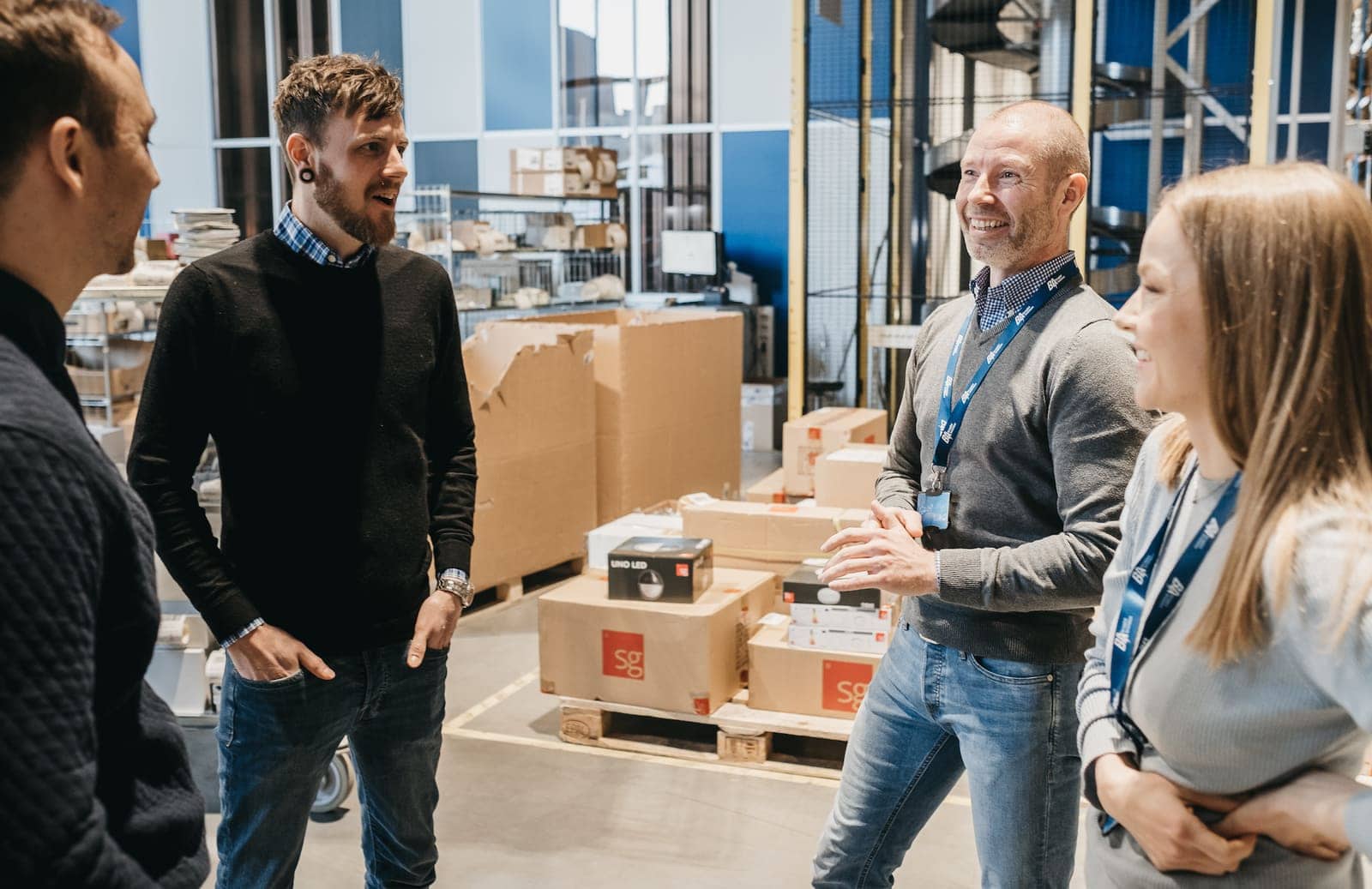
Hallvard Bergsodden, Vice President Global & Strategic Accounts at Element Logic
Designing automation for uncertainty
This is where traditional automation models can fall short. Highly customized, fixed systems may deliver strong efficiency in stable environments, but they often struggle when flexibility becomes a priority. At the same time, relying too heavily on manual processes makes it difficult to absorb volume peaks, manage labor availability, or protect margins. Most 3PLs are therefore looking for a middle ground: automation that introduces structure and predictability, while still allowing room to maneuver.
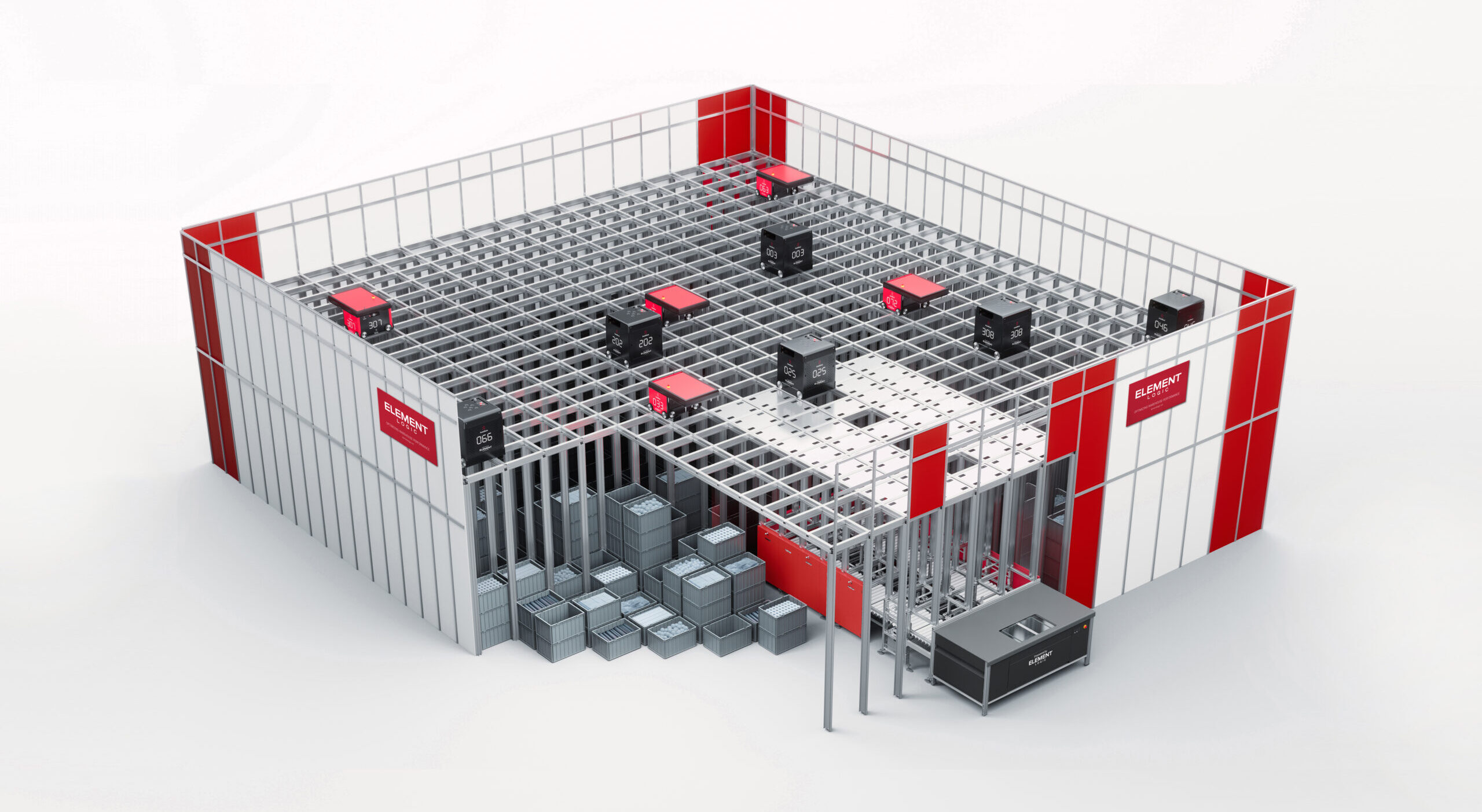
In recent years, that balance has increasingly been found in modular and standardized approaches. Rather than designing warehouses around worst‑case peak scenarios, many logistics providers now favor solutions that can be expanded step by step, aligned more closely with real demand. This reduces financial risk, particularly in a market where contracts may be short and customer portfolios change frequently. It also makes it easier to replicate successful concepts across multiple sites and regions, creating consistency without sacrificing local flexibility.
From systems that perform to operations that evolve
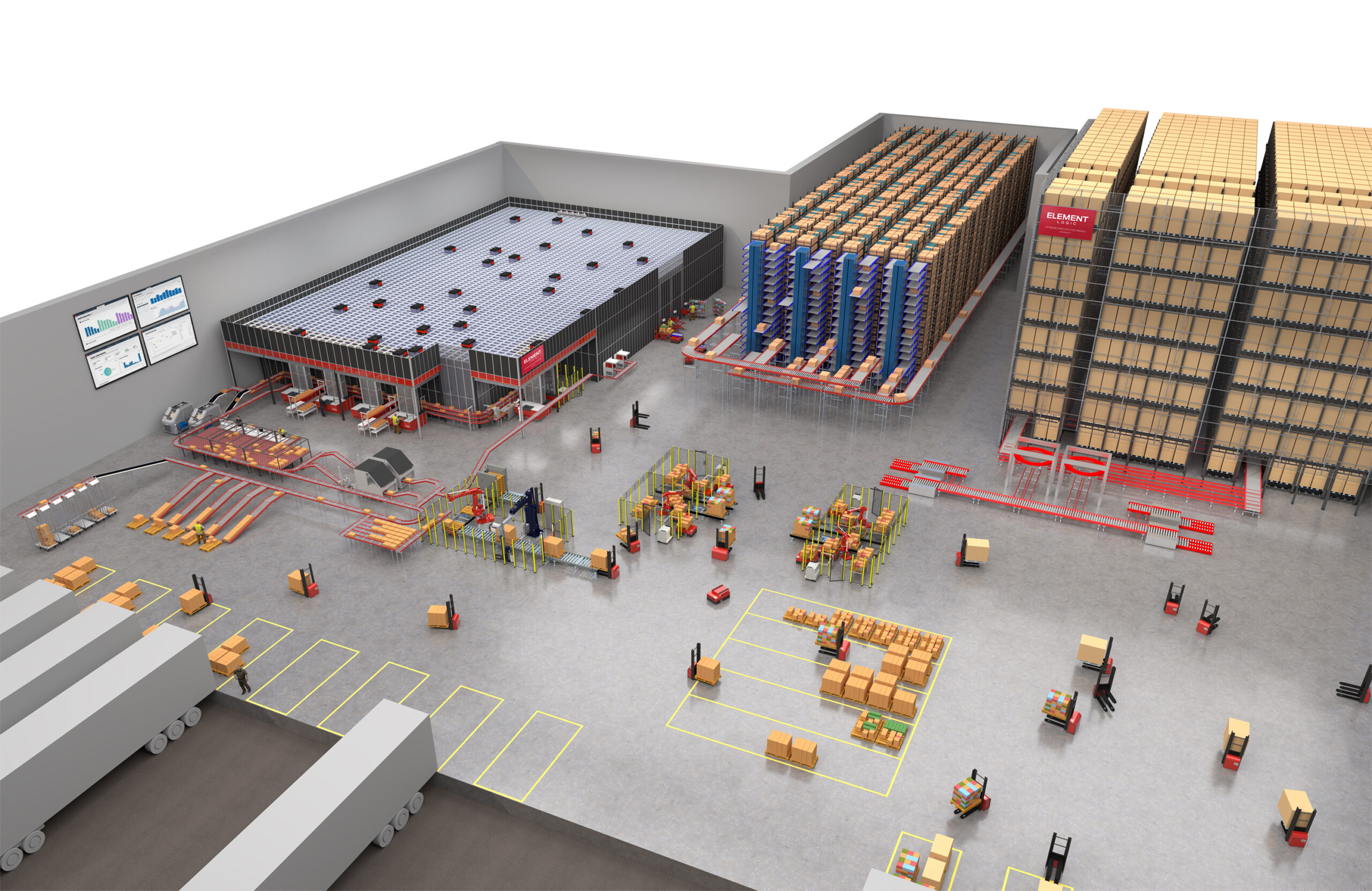
However, modular automation alone is not enough. As operations become more complex and shared across customers, the role of software becomes decisive. Software is what enables capacity to be allocated dynamically, workflows to be adjusted, and performance to be monitored across clients and processes. It is software that allows automation to behave less like a static installation and more like a living system.
This is closely aligned with Element Logic’s strategic focus on becoming a software‑led, customer‑centric solution partner, where technology, data, and advisory capabilities work together to create long‑term value. For 3PLs, software‑driven automation provides a way to handle variability without losing control. It creates visibility across operations, supports data‑driven decisions, and enables continuous optimization even as customers, volumes, and requirements change.
Software gives 3PLs flexibility where they need it most,” Bergsodden explains. “It allows them to adapt operations without constantly reconfiguring the physical setup, which is crucial when margins are tight and time is limited.
Hallvard Bergsodden, Vice President Global & Strategic Accounts at Element Logic
That long‑term view also changes how automation success is measured. Increasingly, logistics providers look beyond go‑live performance and focus on how well a solution supports the entire operational lifecycle. This includes onboarding new customers efficiently, maintaining service levels during peaks, optimizing productivity over time, and ensuring high system availability day after day. It also includes the ability to evolve the solution as the business grows, whether through expansion, new services, or changing customer demands.
For some 3PLs, this lifecycle perspective extends even further into how automation is financed and consumed. Models such as Automation as a Service are gaining attention as a way to reduce upfront investment and better align automation costs with contract duration and usage. While not suitable for every situation, these approaches reflect a broader shift in mindset: automation is no longer just an asset on the balance sheet, but a capability that should flex with the business it supports.
Building warehouses that can keep up with change
All of this reinforces one central insight. In a market defined by uncertainty and competition, flexibility is not a trade‑off against efficiency it is a prerequisite for sustaining it. Warehouses that are designed solely for today’s requirements risk becoming constraints tomorrow. Those designed to adapt stand a better chance of protecting margins, meeting customer expectations, and scaling with confidence.
“Warehouses are not static assets anymore,” Bergsodden concludes. “They are living operations. The ones that succeed are those built to change, not just to perform.”
At Element Logic, our role is to help 3PLs navigate that reality. By combining deep logistics experience, scalable automation concepts, and software‑driven insight, we support warehouse operations that are ready not only for today’s demand, but for the uncertainty that defines tomorrow.