From automation toward autonomy, and what it means for your warehouse
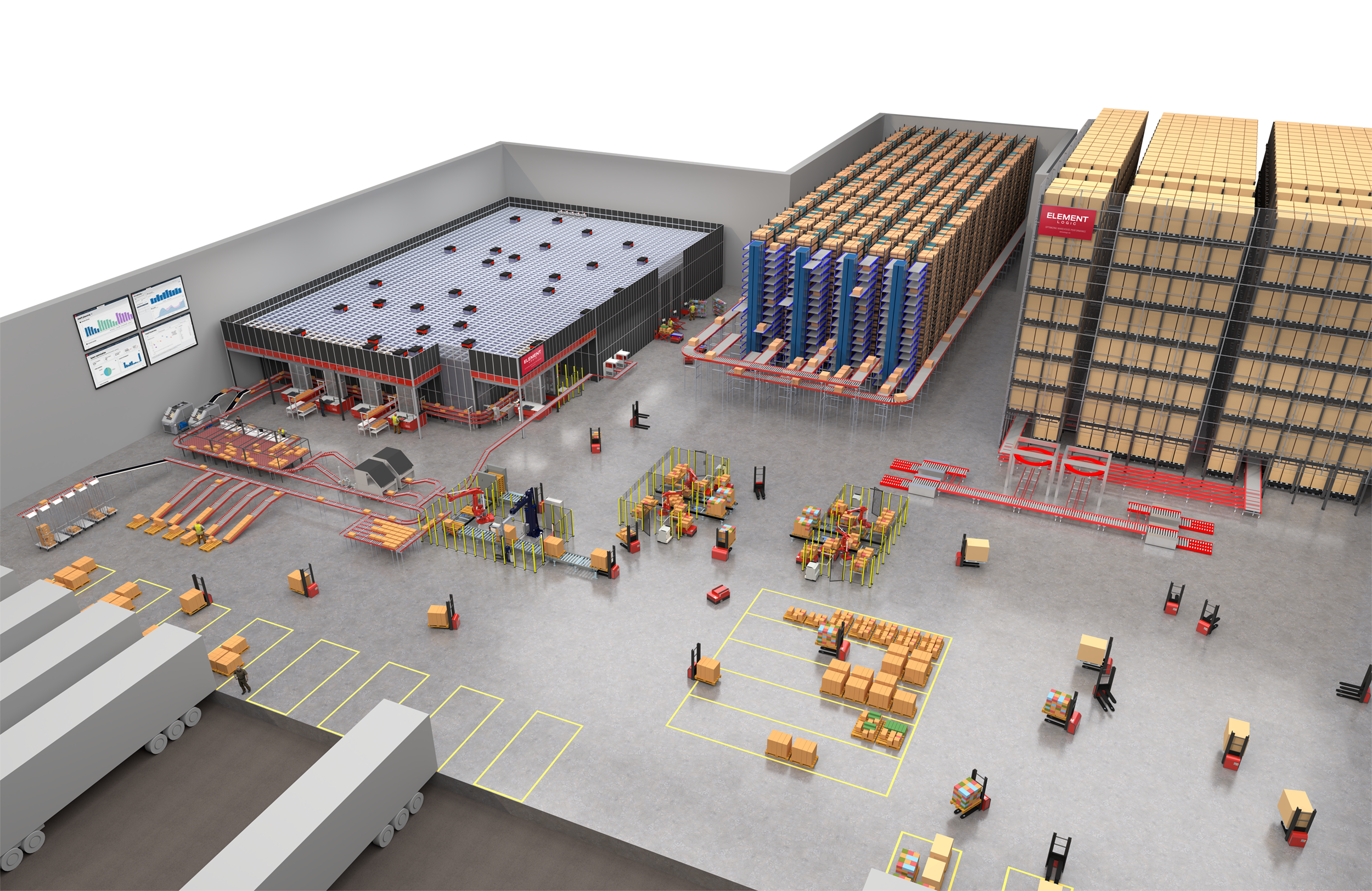
The latest developments from AutoStore point toward a more autonomous future for warehouse operations. For Element Logic, the opportunity lies in applying these technologies where they can bring meaningful value to customers and make a real difference. Making better use of space, removing unnecessary manual work, connecting processes, and improving everyday warehouse performance.
Warehouses rarely stand still. Product ranges change, volumes grow and fluctuate and customer expectations increase. What worked when an automated system was first designed may not be exactly what the operation needs five or ten years later.
That is why the idea behind AutoStore’s Fall 2026 announcement, “from automation toward autonomy,” matters.
It is not a promise that warehouses suddenly become fully autonomous. It describes a more practical development: gradually giving automated operations greater flexibility and intelligence, while reducing some of the manual work and disconnected processes that still exist around them.
For us at Element Logic, that is where this announcement becomes interesting.
The question is not simply what individual technologies can do. It is how we can combine them with the rest of the warehouse to solve real operational challenges.
A warehouse that can adapt as the business changes
One of those challenges is product variety.
A warehouse designed around yesterday’s assortment may need to accommodate very different products tomorrow. Different SKU sizes and changing order profiles can create additional handling or require processes outside the automated storage system.
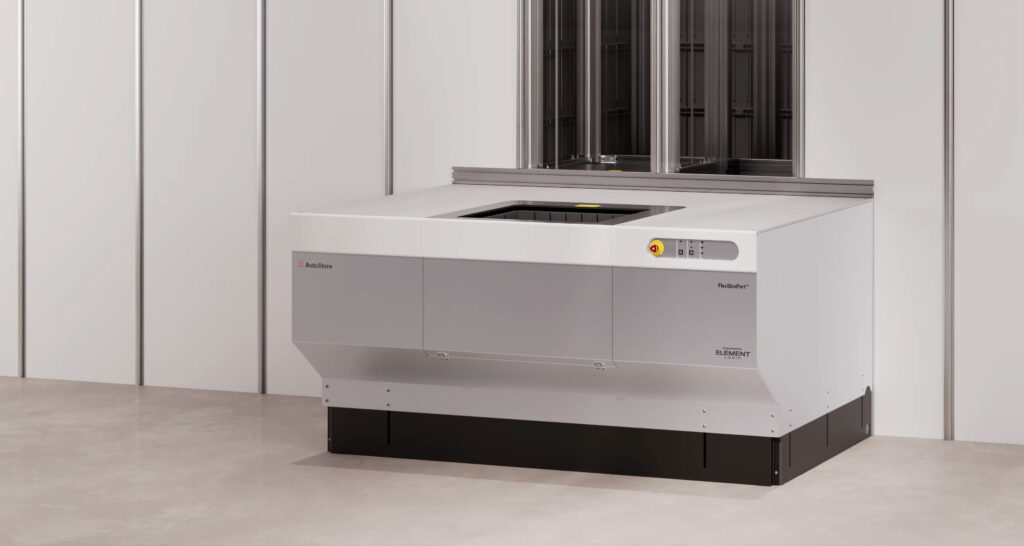
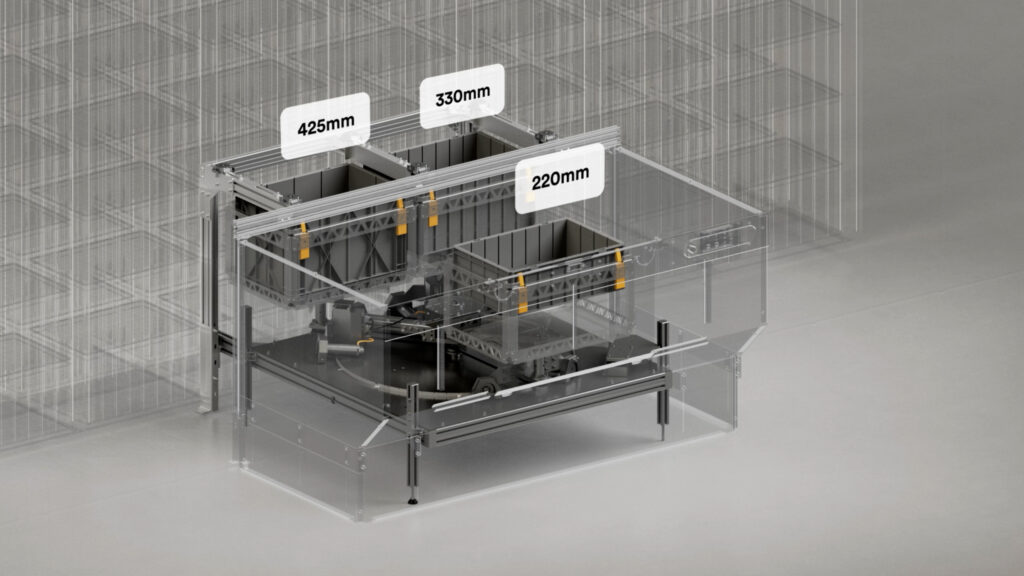
AutoStore’s developments around FlexBins and FlexBinsPort address this by creating more flexibility around different Bin sizes. FlexBinsPort is designed to handle the standard AutoStore Bin heights and case-handling Bins through a single workstation. Matching Bin size closely to the SKU can improve storage utilization by 10 to 15 percent.
The percentage is useful, but the bigger point for customers is flexibility.
If the assortment changes, the automation needs to be able to change with it.
That gives Element Logic more options when looking at how storage capacity, picking and the wider warehouse should be designed around a customer’s needs.
Connecting more of the warehouse
Storage and picking are only part of fulfilment. Before an item reaches the grid and after it leaves, there may still be several processes involving people, conveyors, cartons, robotic systems, packing equipment and other technologies.
This is another area where the latest developments open interesting possibilities.
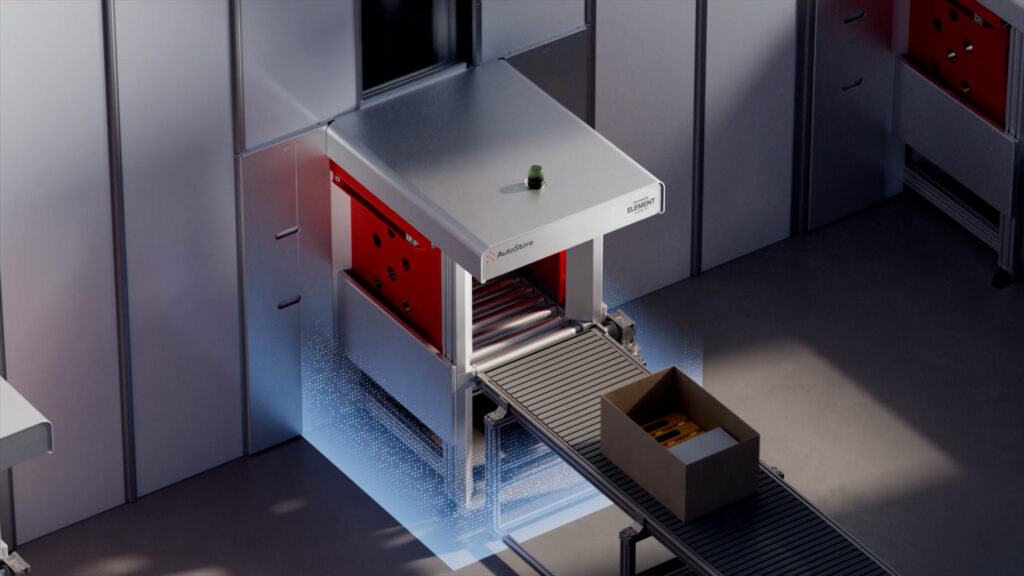
Updates to AutoCase extend automated case handling to standard 600 x 400 mm cases and allow a task group to be distributed across several AutoCase stations. AutoStore is also developing robotic piece picking further including automated induction, barcode scanning at the workstation and robotic cycle counting.
For Element Logic, the opportunity is to look beyond each individual piece of technology.
We already work with warehouses where AutoStore forms one part of a wider solution that can include robotic piece picking, conveyors, sortation, packing, and warehouse software. We describe this direction as connecting induction, storage, picking and outbound processes rather than treating them as separate islands of automation.
The more of those processes that can work together, the more opportunities there are to reduce manual handoffs and simplify the overall flow. That is an important step toward greater autonomy.
Better information can be just as important as more automation
There is another side to autonomy that is less visible than robots moving around a warehouse, namely making better decisions.
A highly automated warehouse generates large amounts of operational information. The value comes from knowing what that information tells you and what to do with it.
This is an area where AutoStore’s developments and Element Logic’s own software capabilities complement each other.
CubeAnalytics helps answer whether AutoStore is working as expected, while eLogiq looks at whether the warehouse is running efficiently and where it can improve. Together, they contribute to a broader intelligence layer for the warehouse, connecting system performance with operational insight.
That connection matters. Understanding how equipment performs and how the operation around it can improve gives warehouse teams a stronger basis for action. As warehouses become more connected, we believe these complementary capabilities will play an increasingly important role in enabling greater autonomy.
Making better decisions before committing to automation
Some of the most important decisions happen long before a robot moves its first Bin.
How much capacity is actually required? How should the system be configured? What happens if volumes change? And where will additional automation genuinely create value?
The Fall announcement also introduces new AI-supported capabilities designed to help AutoStore and authorized partners explore these questions.
CubeExplore uses benchmarks from comparable AutoStore projects to support ROI modelling, while AutoStore Intelligence in CubeStudio supports system design and simulation. These are partner-facing tools rather than products operated directly by customers.
For customers, the important point is therefore not the tools themselves.
It is the opportunity to make better-informed decisions before committing capital.
This fits closely with how we believe automation should be approached at Element Logic: start with the operation and the business challenge, then determine what combination of technology will deliver the right result.
From automation toward autonomy, one step at a time
There will probably never be one moment when a warehouse suddenly becomes “autonomous.” It happens gradually.
One manual handoff disappears. A previously separate process becomes connected. A system adapts to a broader product assortment. Operational data leads to better decisions. A repetitive task is automated, allowing people to focus elsewhere.
Put enough of those improvements together, and the nature of the warehouse begins to change.
That is why we see AutoStore’s Fall 2026 announcement as more than a collection of new products and features. It expands what can be considered when designing and improving an automated warehouse.
AutoStore continues to develop what is possible within and around the cube. At Element Logic, our job is to understand which of those possibilities matter for each customer’s operation, connect them with the right software, technologies and processes, and turn them into better warehouse performance.